Project in development

A robot that lives in a home, not in a plant.

A prototype in development: helping elderly and frail people, driven by voice, with the AI running on board and the data staying in the house.

Or write to us: info@ggtechnologies.sm

30+
years of experience
10+
automated factories
100%
developed in Europe
Why we work on it

The camera in the room is the problem, not the answer.

Anyone caring for an elderly parent would like to know whether they have fallen, whether they have eaten, whether the house is too cold. The tools that make that possible — cameras, microphones, sensors — are also the ones nobody wants in the living room, because they send everything to somebody else's server.

We are building a prototype that tackles the contradiction on the technical side: the robot sees and hears, but the model runs on board and what it recognises stays in the house. It is DigiSense® applied to the most delicate case we know. Today it is a prototype in development, not a product you can buy.
Status

A prototype in development. It is not a product for sale and it is not a medical device.

Processing

On board the robot, on the DigiSense® framework: audio and video never leave the house.

Base

Reachy Mini, the open-source platform by Pollen Robotics (Hugging Face group).

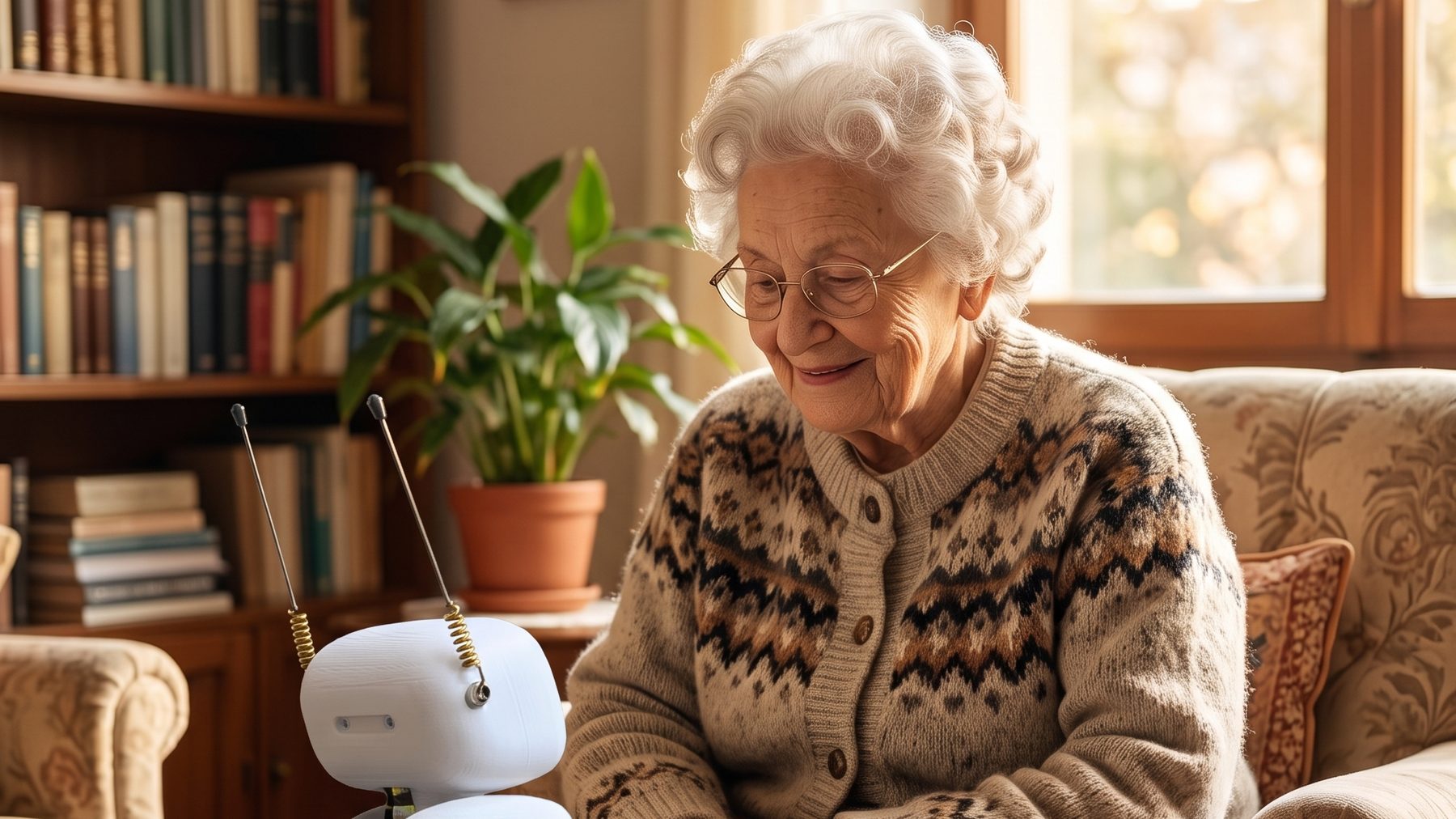
An elderly woman sitting in a living room looks at a small white robot with two antennas, resting on the table in front of her.
Illustrative image generated with AI. The prototype is in development: the scene does not depict a real installation.
How it is built

An open-source robot, a voice, and a model that runs on board.

Where the robot's data goes Camera, microphone, temperature and humidity feed the robot. The model runs on board and answers by voice. Audio and video never leave the house. IN THE HOUSE CameraMicrophoneTemperatureHumidity Reachy Mini LLM on board Spoken answer Cloud audio and video never leave

Open-source base

We start from Reachy Mini, the open-source robotic platform by Pollen Robotics, rather than building the mechanics from scratch: the work goes into the capabilities.

  • Open-source robotic platform
  • Hardware changes documented
  • No lock-in to a single supplier

Voice and model on board

A voice module and an internal LLM: you talk to the robot in plain words and the answer is formed on the machine, without asking the internet for anything.

  • Voice interaction, no screens
  • LLM running locally
  • Works with the network down

Sensing the room

Camera, temperature, humidity and microphone. The microphone is being trained to recognise sounds that may indicate a fall or a call for help.

  • Camera and ambient sensors
  • Recognition of unusual sounds
  • Processing on board, not in the cloud
Where we are

What exists today, what we are adding, what is planned.

01

Today

A working prototype on Reachy Mini, with the voice module, the on-board LLM and the ambient sensors.

02

In development

Recognition of sounds that may indicate a fall or a call for help, and refinement of the voice interaction.

03

Planned

A home-automation hub connecting the robot to the wearables already in the house, to read their vital-signs data.

04

To be studied

Recognising a person from their electrocardiographic signature. That is biometric data: before the engineering, we have to settle how to handle it.

FAQ

Frequently asked questions

Can I buy it?

No. It is a prototype we are working on, not a catalogue product. If you would like to follow its development or host a field trial, write to us.

Does it detect falls?

We do not say that, and the distinction matters. We are training the microphone to recognise sounds that may indicate a fall or a call for help: it is an aid, not a safety system to rely on. A device that promises to detect falls is a different thing, with different obligations.

Where do the images and the audio end up?

In the house. The model runs on board the robot and the recognition happens there: no server receives the camera or microphone stream. That is why we chose this architecture instead of a simpler one in the cloud.

What does recognising a person from an electrocardiogram mean?

That a heart trace is distinctive enough to tell one person from another, so a wearable could tell the robot who is in front of it without using the camera. It is a future possibility, not a feature: it is biometric data, and how to handle it has to be settled before the engineering.

Want to follow it, or host a trial?

We are looking for care homes, cooperatives and families willing to try it in the field. Write to us and we will tell you where we really are.