The constraint is the same; the audience changes.
The apps we publish have one thing in common, and it is a technical constraint: they run on the machine of whoever opens them and send nothing anywhere. A viewer of measurements demonstrates that well to somebody holding a file of measurements. A game demonstrates it to everybody else.
Here the constraint shows in one place: the high score table. An online game would keep it on a server, behind an account and a sign-up. This one keeps it in the browser, the way the cabinet in an arcade did — it was that machine's table, and you went back to that machine to beat it.
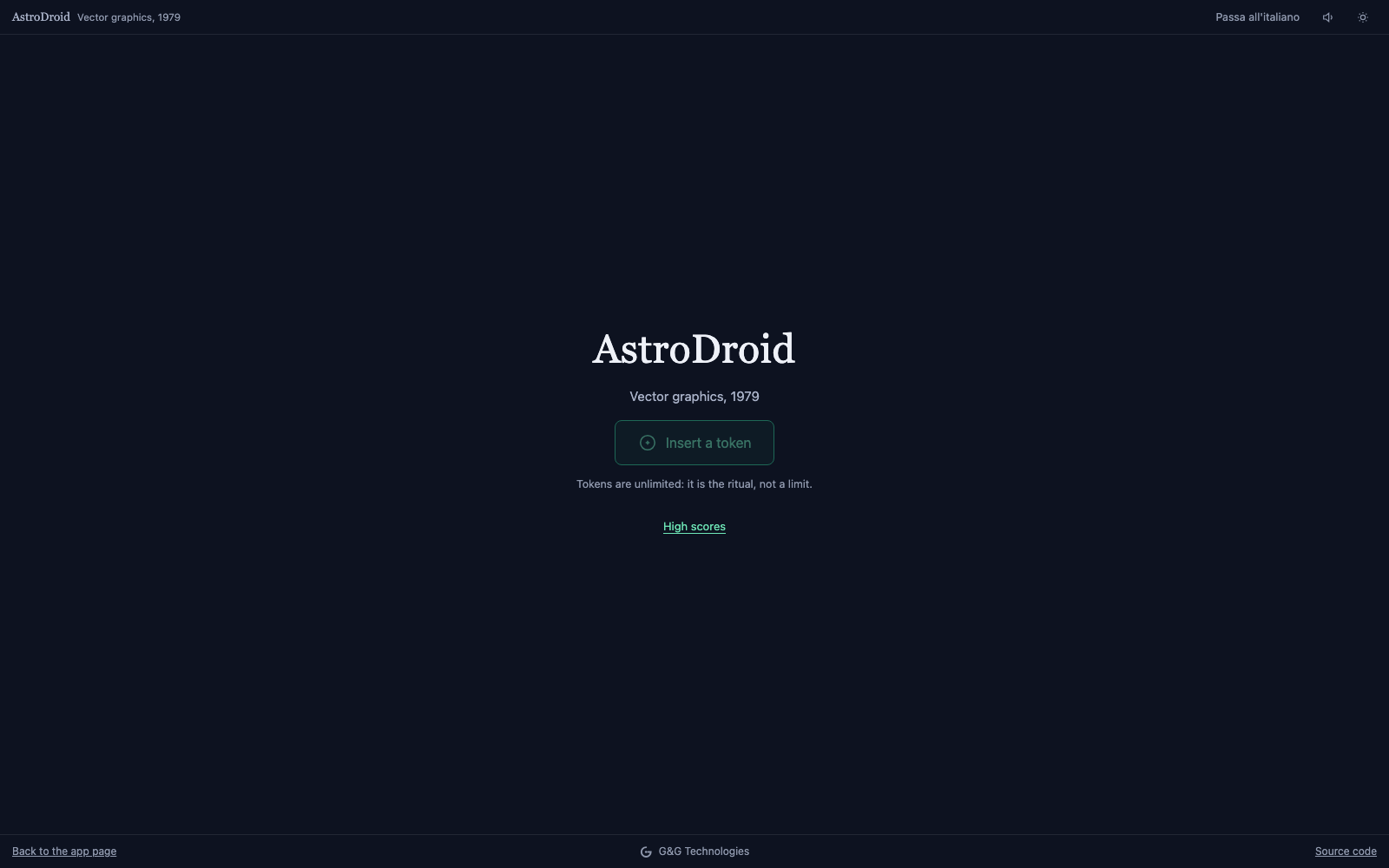
The token is the same reasoning. Games are unlimited: the token is there to say that what you are about to do starts now. It is also the gesture a browser needs before it will play any sound, so the ritual pays for itself.
What it does
- Asteroids in three sizes: a large one breaks into two medium, a medium into two small.
- A ship with inertia: thrust once and you keep going.
- Hyperspace: it drops you elsewhere at once, at a risk that grows with every jump.
- Two saucers, one firing at random and one taking aim.
- Waves that grow, and an extra ship every ten thousand points.
- A high score table with your name, asked for at the end of the game.
- It plays from the keyboard, from a phone and with a gamepad.
- Exports and re-imports the table as a file, so a browser cleanup does not take it away.
- Works without a connection after the first visit, and installs like an app.
What it does not do
- There is no worldwide table: the scores stay in this browser, on this computer.
- There is no two-player game, on one machine or over a network.
- It asks for no account and shows no advertising.
- There is nothing to buy: the tokens are unlimited and cost nothing.